When I first read this article on why keeping your options open is less satisfying than making irreversible decisions, I was shaking my head. No, no, and no.
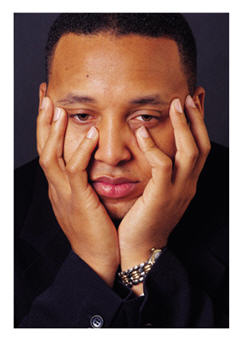 I’m good at decision-making, yet I love having alternatives, not to mention contingency plans.
But I persisted with the article (despite my own resistance), and like its author, Dr. Heidi Grant Halvorson, I came around to seeing the reasoning behind research which indicates that most are more satisfied with fewer choices.
According to the article, we have a psychological immune system that encourages us to feel good about our decisions.
Still, I wonder how this comes into play when dealing with scenarios of lesser-of-two-evils or, actions that may trigger something in our complex histories. Do we really prefer situations in which there is no turning back?
For myself, I certainly recognize my capacity to make do, when it comes to results that are less than ideal. In that light, I see the psychological immune system at play, as I adjust my viewpoint to focus on positives in a less than desirable situation.
Don’t most of us do that if we can? Make the best of something, and then move on?
But are we genuinely more satisfied when total commitment to a particular path is required? Would that apply to marriage – or marriage as it once was? To career as it once was? Is there more applicability to this conclusion than I realize, particularly when observing our culture of No-Permanent-Commitments and the Next-Available-Exit-Strategy?
Is our “if you don’t like it you can get out of it” approach partially to blame for vague feelings of dissatisfaction and restlessness – with almost everything?
Among the life skills I’ve tried to teach my children are responsibility and accountability. When you give your word, you make a commitment. When you pursue a goal, you make a commitment. In both instances, you do so with your best effort and the intent to follow through. You accept consequences as the natural result.
You don’t quit.
But, you address errors in judgment which may require that you stop, redirect, and go down a different path.
I don’t see this as conflicting with a desire for choices, or even exercising them. Perhaps the problem lies in the nature and number of choices, their context, and our tendency to believe that they are always viable – and available.
Had my son been accepted by every school he applied to and given equal amounts of scholarship, would his decision have been tougher? Naturally. Would he have second-guessed himself all the way to his new campus?
I’m not convinced.
Certainly when I consider the online dating world I can apply the principles described in the article, including the excess of options and their less than optimal outcome for many. Those who have ridden the Internet Encounter-Go-Round know very well what I mean; tens of thousands of names and faces offer an impression of infinite bounty. So why commit to anyone? Or at the very least, why not take as much time as you possibly can – and oh by the way, keep shelling out for that ongoing membership?
Still, returning to the article, we are told:
Human beings are particularly good at rearranging and restructuring our thoughts to create the most positive experience possible in any situation. The psychological immune system protects us, to some extent, from the negative consequences of our choices…

Don’t we rewrite our own histories, bit by bit? Doesn’t it seem natural that we would subconsciously tinker with the fit of our decision-making results until we come around to acceptable levels of satisfaction?
Is this necessarily a good thing?
Incidentally, the author cites examples of choosing a college (as I just did) or hiring the best possible candidate into a job. When we’re talking about the personal arena – stay or go when it comes to marriage, committing to a single path in dealing with a health issue – does our psychological immune system still kick in? Does no turning back truly offer solace?
Dr. Halvorson goes on to clarify:
I’m not, for the record, saying reversible decisions are never beneficial. Obviously if you have no real basis for making a good choice in the first place and you’re just guessing, or if the consequences of your choice might end up killing someone, the option of a do-over is probably a good thing.
This would suggest that lesser-of-two-evils decision-making falls outside the psychological immune system – possibly. It definitely positions second chances as helpful in extreme circumstances which begs the question – which circumstances?
While I’m in no position to refute this research (and the conclusions seem sound), I wonder if the detailed data reflect differences by gender and age, not to mention more fluid factors such as marital or financial status. In my own case, my particular experience of post-divorce life is a significant contributor to any decision-making I make relative to relationships, which seems entirely logical, doesn’t it?
I am fully aware that I can commit to loving, but commit to marriage? I am far happier leaving my legal options open, I can assure you.



Our “psychological immune system” may also be our problem… things that reinforce our happiness with our choices also reinforce our experience of being a separate other. Place this in stark contrast to Victor Frankl who, in Auschwitz, saw all his individuality, his identity, his freedom and his wife stripped away from him; in this context of ego-destruction he surrendered to his situation and did what he could to help others, surviving in the end even when others who did more to overtly save themselves perished by blind bad luck (i.e. as liberation neared, the Nazis gathered up last prisoners to take them to a Red Cross Station, ostensibly to appear less brutal; Frankl did not make it onto the convoy, which was brought to a warehouse and everyone burned to death).
I suspect that the more we expand our sense of “self” to include others, the better our group outcome… the better we patch the hole in titanic levels of alienation rather than fighting for the few spots in the lifeboats.
In the end, this may be a yin-yang relationship between the ego and the soul; we need to individuate and be our unique selves, (and thus “immune” from feelings of shame, terror and isolation), but from there we need to discover that our truer Self is collective. Perhaps not being left out, or drowned in a sea of too many choices, means realizing that we’re all in this together, rather than trying too hard to “get our needs met.”
Of course this really means that whoever is so fortunate to be happy with themselves and their situation would be best served to help those who do not. Boiled down to romance, I think it is the thick blanket of fear, shame and hurt that isolates us from each other, making each new “other” seem alien and threatening to our powerful psychological immune system (which is like a medieval fort—protecting a lovely hill town from would-be marauders who now want nothing more than olive oil and lavender soap).
Interesting article. The last paragraph spoke to me, “But assuming that your choice is carefully considered and you’ve weighed your options, you will be both happier and more successful if you make a decision and don’t look back.” For both me and my children I try and instill to make the best decision you can at the time, given the information you have at the time. The could’ve, should’ve, would’ve, will just eat at you.
Fantastic post, DA.
And, as always, provoked some deep thoughts.
Barbara
A foolish consistency is the hobgoblin of little minds — Emerson (naturally) http://www.emersoncentral.com/selfreliance.htm
I could open up the quote machine on this one. I go with what William James (one of my heroes) had to say — “Habit is the flywheel of society.” In context, he meant that consistency/habit serves a practical utility, to free us to deal with more important issues. But when the old ways are no longer working, it is then incumbent on us to reconsider them. I don’t make changes quickly, unless circumstances should require it.
Total commitment is an act of lemmings running into the sea and cattle stampeding over the cliff.
I studied physics in college as part of my botany major. I also studied existentialism as part of my philosophy major. Both fields enlarged my world then. I forgot much of this until life become incredibly hard: two of three children with chronic illness, an overwhelmed, immature, and ungenerous spouse, death of a parent, stillbirth…..and later a divorce that fractured my family so much that one child does not speak to me.
Then, some of the core postulates from these fields re-emerged, with some surprising benefits. From physics, the quantum knowledge construction of duality: wave and particle. AND….BOTH…AT THE SAME TIME, EQUALLY POTENT, which I apply to what Paul would say as lemming-like head-over-heals yes to love (Let this be WAVE). AND, caution about what may happen over time (Let this be PARTICLE).
From existentialism, which also encompasses what Frankl learned in that crucible of horror, is that at each moment, in deep personal freedom, we chose our responses. Let mine be brave and courageous, and build the world.
Depends. I’ve changed course and had it be the right thing, then had it be the wrong thing. I think the most important factor is not to coulda-shoulda yourself to death — that’s what hurts one’s immune system.
That coulda-woulda-shoulda. Bad news, yes.
I have to admit, I’m the kind of person who prefers fewer options, choice is not something I do well with because I’m chronically indecisive.
This line from Kabir has always haunted me:
Somewhere you took a turn away from yourself,
And that is why everything you do has some weird failure in it.
So true, Wolf.