Ever moved as a child? As an adult? There’s usually a mix of emotions when you leave one home for another – worry, excitement – and of course, all that packing, cleaning up, then settling in. Well, here we are – a new home for my Daily Plate of Crazy! This particular transition got me thinking about the notion of home, in its many meanings.
Home is where the heart is
 When I was a child, the expression home is where the heart is seemed true. Romantic, isn’t it? What’s not to love about the concept that wherever your loved ones are, you’re at home?
There are other interpretations, of course. Sometimes places whisper to you, and in those locations, you feel you’ve come home.
As an adult, I realize that love – and life – involve more complexity than something as simple as “home is where the heart is.” Other people are not our homes, though they may share space in our hearts. Some locations don’t suit us, yet we can make ourselves at home in many of them, for a time at least. Still other environments – a house, a neighborhood, a city – will never feel sufficiently warm, accepting, or safe to call home.
Make yourself at home
When you’re comfortable, secure, fully yourself (even if that self remains mutable and elusive) – you feel at home. How many times do we use that expression? “I feel so at home here,” we say, when welcomed into a situation in which we feel accepted.
When you’re allowed to make yourself at home, wherever that may be, you enter the “extraordinary ordinary” zone for some of us who don’t feel at home easily – not in our heads or our skins, and only in some locations. Yes, it’s all about the identity discussion again. Shouldn’t we, first and foremost, feel at home in our heads and in our skins? Yet it’s often the last place we feel at home.
When it comes to children, we have the opportunity to expand their capacity for home. I believe in allowing kids the physical and emotional space that is theirs – so they may own themselves – when they’re ready, they will invite friends into their world, feel accepted and safe on good days and bad, and very much at home with themselves.
Home is temporary
For those in the military or other lifestyles that require frequent moving, a change of address is standard fare. For some, it may be exciting; for others, tumultuous.
For those who grow up in a mix of cultures with families dispersed across oceans or continents, a sense of “belonging” – which is certainly about home – may be challenging. You may feel at home nowhere. Or anywhere. Or something in between.
When we lose our parents, we become the elders, the generation holding up traditions – and forced to recognize our own aging and immortality. Whatever our feelings about childhood, it is painful to see the place we grew up emptied, and then sold. We can never return, not even to make peace with our ghosts.
Downsizing, rightsizing, physical realities
There’s no denying the physical realities to the concept of home. Some environments facilitate our feeling more or less relaxed, inspired, enthused, or constrained. Objects may be infused with good memories, or at the very least, familiar and comfortable. Over time, bringing our “good stuff” into a new place helps it become home.
Whatever euphemisms we borrow from the corporate world – rightsizing or downsizing – there is a profound sense of loss in adjusting to smaller spaces, stripping away possessions, status, and familiarity. We lose self-esteem; we may even feel shame, though we know, in our adult minds, that we should not. Then we adjust, and often find more in the “after” – a different sort of more.
Perhaps rightsizing is a good term after all. This is our opportunity to unearth essentials, to reorient to needs versus wants, and to move through the pain of transition to something different, and hopefully better.
You can’t go home again
Years ago, at Christmastime, I told my husband I wanted to take toys and baked goods to a homeless shelter. He thought I was a little nuts, but said fine. The boys were about four and five. I wanted them to see that the holidays were about more than us. To realize we were fortunate.
So we packed up the kids, two bags of small gifts along with food, and we went to a rough part of the city, to a battered woman’s shelter. I doubt my boys recall; they were too young. But I remember. I remember the children. I remember despair.
 Thomas Wolfe’s novel, You Can’t Go Home Again, teaches us that with change, we can’t return to the places of a youthful self. We will not be seen in the same way; we will not relive earlier days through the same eyes.
That homeless shelter was real, not symbolism in literature. Millions can’t go home again. Their homes have been ripped away by natural disaster, by war, by poverty, by domestic violence; denied by circumstance of birth; once achieved through hard work and then lost – through economic hardship or a health care system where a single devastating illness in a family can cause financial ruin.
I can’t solve these problems. Nor can I pretend they don’t exist. I can’t do much, but I can do something. One child at a time, and I don’t mean just my own.
Homelessness
If you are homeless, you’re not reading this. We know you, though we pretend otherwise. You are disenfranchised. Peripheral. We know where you are not; we avoid where you are. We fear you, because we don’t want to believe we could become you.
Many of us have lost homes, or we’re legitimately worried about losing homes now. I’ve been through it once. I don’t want to go through it again. It was painful, but we survived. For now, we still have a roof, “stuff,” food, learning, and a small but very real family. For now, a home.
Giving is the cure for not having
It is mid-December, and this is the first year I can ever remember that I have made no charitable contribution of any sort. Nothing. Not money, not donations of clothing. Nothing. I realized that this weekend, and it stunned me. It is more about fatigue than indifference. And I still have much to give – toys, clothes the boys have outgrown, books.
Objects from our home – that would help others feel more at home.
- What do we do for each other to extend a hand?
- How can we hope to populate a world with children who believe in the future, without extending a hand?
It was at Privilege of Parenting where I read it and I cannot forget it: giving is the cure for not having. I need to do more than read it. I need to live it.
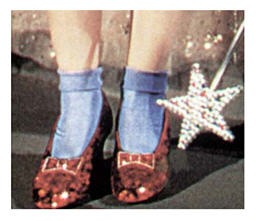 There’s no place like home
I grew up in a house that never felt like home, have lived in single rooms I transformed into home, have felt at home in other countries, in some cities more than others, and in divergent selves.
I never felt at home as a business person. I feel fully at home as a writer.
Beyond these walls, I do not feel at home in the city in which I reside, yet this little house where we eat and sleep and cry and laugh has become our home. It is filled with warmth, good memories, real lives.
And we all know – there’s no place like home.
- Where do you feel most at home?
- Have you been more at home in some locations?
- Do you feel at home in your skin?
- Do you feel at home in your work and your many roles?
- Do you carry “home” inside you, in objects, memories, loved ones?
Now, this site – is another sort of home. I will have more freedom, more space to stretch and become my selves. I’d like you to feel that space and freedom as well. To feel welcome.
So please, make yourself at home.
© D A Wolf



The home I’m in now is the place I’ve lived the longest as an adult. I really like it! That said, if I had to move, my new home would be just as great. It’s all about having my kids with me, creating memories, laughing a lot, not taking life too seriously. At some point, my home will pass to someone else, and I hope their memories here are just as joyful as mine have been.
It’s not so much the place, as it is the company that your keep, that makes it feel like home.
Moving has been a life-long thing for me. Come April, 2010 I will have been in the same state for 15 years – the longest in my life. And in those 15 years I have lived in 4 houses – my last one being for not quite 2 years – and it’s for sale. 🙁
Growing up I lived in two different states and many different towns bouncing around between my divorced parents and then during my marriage we lived in 5 different states before settling where I am now.
Funny that I’ve always been a “nester”, putting a lot of effort into making each house our home. But yes, home is always where the heart is.
Hope you like your new “address”! 🙂
I read this with tears streaming down my face.
Two thoughts bubble insistently up.
1. I have never really felt fully at home anywhere. I moved a lot as a kid. I have an MBA but never really felt I belonged in the business world. I can’t really call myself a writer because that doesn’t feel right. I don’t work full time but I’m also not at home with my kids full time. I am halfway everywhere and fully nowhere. I know you can relate to this. Sometimes I wonder if its deliberate, on some level, this not really engaging – is it a defense mechanism? I don’t know. I do know I feel a creeping sense that doing everything partway is akin to doing nothing well.
2. I 100% wholly agree that giving is the cure for not having. I could not agree more. I aspire to raise kids who know this in the marrow of their bones. It is not easy, but it’s vital.
Welcome home, BLW! I know it has taken a lot of hard work to get here, but when was anything worthwhile ever easy?
I’ve been thinking a lot about the idea of home during this holiday season, about the ways in which this place I now live is becoming home, infused with the sounds and scents of my sons. Until recently, I only called the house where I grew up “home” and it still does feel that way – it is a container for many memories, good and painful, in a way that my current house isn’t. Yet.
Yay! All moved! Good for you 🙂
I drove by our old house today with my 5 year old, and we felt nostalgic about the old place so we stopped. It hasn’t been sold yet so we went to play in the backyard (I know, trespassing). It felt good, but also a little wrong and awkward. You’re right, you can never go back.
Wow… I know how much hard work this took for you. Congrats! As far as moving, I have moved four times in two years. I am done with it. Again, Congrats!!!!
I’ve lived in over 20 “homes” in my 40-something year life. I have often longed for the good old fashioned sense of home and belonging – small town where everyone’s parents still live in the same house they grew up in, friends and relatives all close by. But your post has me re-evaluating that fantasy. You’ve reminded me that our concept of home changes no matter how many times we move, no matter how close we are to our “original” home. Very thoughtful post.
I have a plaque in my kitchen that says “home is where they love you” and that is honestly what I believe. My heart might be twenty different places, but I’ve always felt a sense of home where I’m loved.
Though my family moved from Chicago when I was 13 (a long, long time ago) part of me never moved. And it’s not like I want to go live there now, it’s like I want to go back to the Chicago that lives inside of me – 1973 Chicago, does that make sense? Or me at 13, or the teen years I never finished there. I can’t get away from it, and it lives in my writing too. Crazy stuff, this sense of home.
Good luck in your new home, BLW!
Such great responses from everyone. So many moves, so many issues around self, love, disruption, the need for “home.”
Linda – you raise the issue of unfinished business in a way. And perceptions of our younger selves, looking back. Another slant on some of my own musings. Thank you for that.
I will certainly make myself at home here. Another lovely, tugging post. I expect nothing less at this point. The question of home is huge, poetic, resounding and critical to who we are as people. Thank you for tapping into another universal vein here.
I moved a lot as a kid, and it damaged me. Some people adjust to upheaval better than others…obviously, I need stability.
Welcome to your new home!
a really lovely post
welcome home
Thank you, Jason. For everything.
This is such a gorgeous post, and so timely right now. Home is so many different things to people, and this post is so lovely and eloquent. Thank you for writing it, and happy holidays! – Stacey
Thank you, and welcome. It is indeed a time of year to remember how much we have, and to share what we can. It’s a win-win!